Understanding Surplus Stores: A Beginner's Guide to Savings
You've probably driven past a surplus store a dozen times, maybe glanced at the hand-painted sign or the dusty window display, and kept right on going. And honestly, that's a pretty common reaction. Most people don't know what's actually inside those places, and there's this vague assumption that it's all outdated junk or stuff that's somehow been rejected by everyone else. But here's what nobody tells you: some of the best deals you'll ever find on tools, gear, clothing, and household supplies are sitting right there behind that unassuming storefront, priced at a fraction of what you'd pay anywhere else.
This guide breaks down exactly what surplus stores are, what you can expect to find, how much you can realistically save, and how to use a directory like this one to find a well-rated store near you. No fluff, no vague promises. Just the practical stuff you actually need before your first visit.
What Is a Surplus Store, Exactly?
A surplus store is a retail business that sells goods that have been removed from their original supply chain before reaching a standard customer. That sounds a bit clinical, so let me put it plainly: these are stores that buy up excess, leftover, or discontinued inventory and sell it to the public at reduced prices. They are not thrift shops, which deal mostly in donated second-hand goods. They are not liquidation outlets in the warehouse-clearance sense, though there is some overlap. And they are definitely not dollar stores, which stock permanently cheap products on purpose.
Surplus inventory comes from several different sources. Government surplus is one of the biggest: federal, state, and local agencies regularly sell off equipment, vehicles, office furniture, and supplies they no longer need. Military surplus is its own category, covering everything from uniforms and boots to camping equipment and field gear that was produced for armed forces use. Retail overstock is another major pipeline, where big-box stores or online retailers have too much of something and need to move it fast. And then there are manufacturer closeouts, where a factory produces more units than they can sell, or discontinues a product line entirely.
All of those sources feed into surplus stores. And because the store typically buys this inventory at a steep discount, they can pass real savings along to shoppers without losing money themselves.
Surplus goods are not damaged, recalled, or unsafe by default. A lot of this merchandise is brand-new, never opened, sometimes still in factory packaging. The reason it's cheap has more to do with timing and volume than quality. A pallet of 500 flashlights that didn't sell before a seasonal deadline is still 500 perfectly good flashlights.
Walking into one for the first time, you might be surprised by how organized and clean most of these stores actually are. Not all of them, sure, but the well-run ones feel closer to a hardware store than a garage sale. Some have actual categories, signage, even barcode scanners at checkout. The stereotype of chaotic bins and mystery boxes exists, but it's only part of the picture.
What Can You Actually Buy at a Surplus Store?
This is where it gets genuinely interesting. Surplus stores are not specialized retailers, which means the inventory is wide and often unpredictable. One week there might be a full shipment of Carhartt jackets in various sizes. Next week, it's a pallet of DeWalt power tools or a stack of restaurant-grade kitchen supplies still in boxes.
Common product categories you'll find include:
- Tools and hardware, hand tools, power tools, fasteners, safety equipment
- Clothing and footwear, workwear, military-style clothing, outdoor apparel, boots
- Outdoor and camping gear, tents, sleeping bags, backpacks, survival equipment
- Electronics, cables, batteries, radios, sometimes laptops or tablets
- Food and grocery items, canned goods, bulk dry goods, snacks near or at best-by dates (if this interests you, it's also worth checking out salvage grocery options in your area for an even deeper dive into discounted food)
- Office supplies, paper, ink cartridges, furniture, filing equipment
- Household items, cleaning supplies, storage bins, small appliances
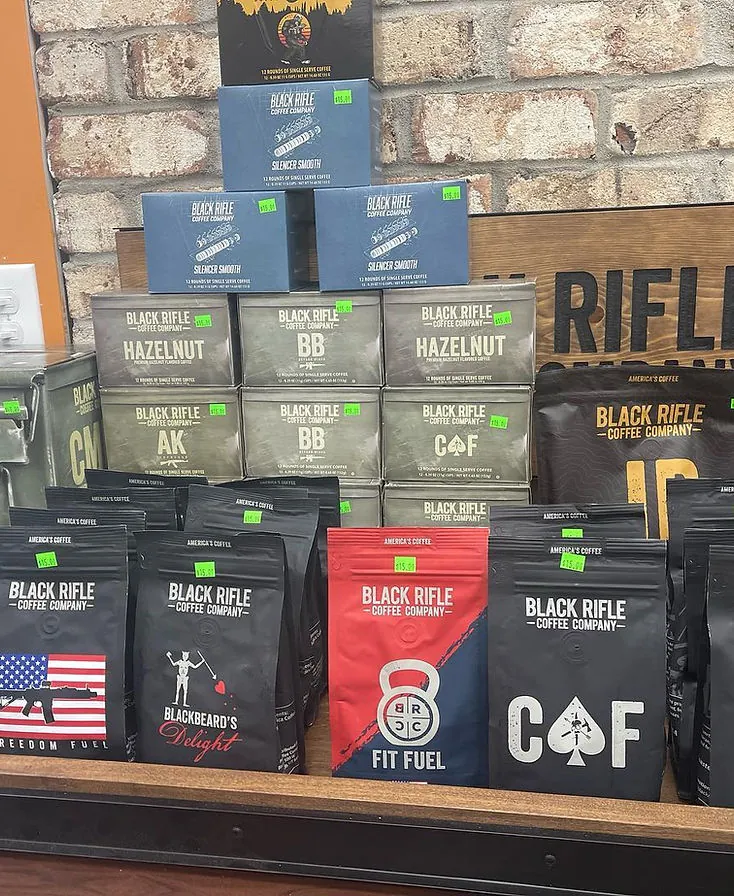
Specialty surplus stores narrow this down significantly. Military surplus stores, for example, focus almost entirely on military-grade gear, field equipment, and tactical clothing. Some carry authentic government-issue items. Others sell commercial reproductions that meet or exceed military specifications. Either way, they tend to attract a specific crowd: hunters, preppers, hikers, and people who just want durable gear that actually holds up.
Government auction merchandise is its own weird category, and honestly one of the more fun ones to explore. You can find office chairs, vehicles, industrial equipment, and electronics that were part of a fleet or agency inventory. Prices vary wildly depending on the auction, but the finds can be genuinely impressive.
Because inventory changes so often, frequent shoppers have a real advantage over one-time visitors. People who go every couple of weeks will catch restocks that a casual visitor would miss entirely. That unpredictability is part of the appeal for dedicated surplus shoppers. It's a little like thrift shopping in that way, except the products are often newer and the savings are sometimes even steeper.
How Much Can You Actually Save?
Let's talk real numbers. Most surplus stores price their merchandise at 30% to 70% below standard retail value. That's not a marketing claim; that's a realistic range based on how the supply chain works. When a store buys 200 pairs of boots for 40 cents on the dollar, they can sell them at 50 cents on the dollar and still make a profit while you save nearly half.
To make that concrete: a pair of steel-toed work boots that retails for $120 at a hardware chain might sit on a surplus store shelf for $50 to $65. A camping backpack that costs $180 at an outdoor retailer might show up for $70. A box of 100 disposable nitrile gloves that's $18 at a home improvement store might be $6 or $7.
Okay, not every item is going to be that dramatic. Some things, especially electronics, might only be 20% to 30% off because demand is high and the store knows it. Pricing at surplus stores reflects a few variables: the condition of the goods (new in box versus open-box versus used), the volume the store received, what local customers are willing to pay, and where the surplus actually came from. Government surplus equipment often goes for less than retail overstock because there's less brand premium attached to it.
In practice, the best deals are usually on things that have low demand at regular retail prices but high practical value. Work gloves, tarps, storage containers, basic tools, winter gear. Things people actually need but don't buy at full price because it feels like too much. At a surplus store, those items are just... cheap. No sale, no coupon code required.
Surplus Stores by the Numbers: What the Data Shows
Right now, this directory lists 223 surplus businesses across five major cities, with an average customer rating of 4.5 out of 5 stars. That last number matters more than it might seem. A 4.5-star average across hundreds of listings, drawn from real customer reviews, means shoppers are consistently leaving satisfied. That's not guaranteed in discount retail.
Breaking down the city numbers: Fayetteville leads with 6 listings, followed by Columbus with 4, and Houston, Las Vegas, and Jacksonville each with 3. Typically, the concentration in Fayetteville makes sense given the city's proximity to Fort Liberty (formerly Fort Bragg), which creates a huge natural market for military surplus specifically. Columbus, Georgia is similarly situated near Fort Moore, another major military installation.
Geography matters a lot in this space. Military towns tend to have more and better military surplus stores. Port cities often have more industrial and government surplus due to shipping and logistics activity. And large metro areas like Houston attract a wider variety of overstock and closeout merchandise simply because of population volume.
Here are the top-rated businesses currently listed in the directory:
| Business Name | Location | Rating | Reviews |
|---|---|---|---|
| Drop Zone Military Surplus | Fayetteville, NC | 5.0 ★ | 1,068 |
| Silverback Military Surplus | Fayetteville, NC | 5.0 ★ | 353 |
| ARK Tactical Inc | Richmond, KY | 5.0 ★ | 218 |
| Gibsons Tactical Tavern | Columbus, GA | 5.0 ★ | 123 |
| HUSKY TACTICAL | Lakewood, WA | 5.0 ★ | 113 |
Drop Zone Military Surplus in Fayetteville stands out immediately. Over a thousand reviews at a perfect 5.0 rating is genuinely rare for any retail business, let alone one in a niche category. That's not luck; that's a store that has figured out what its customers want and delivers consistently. If you're anywhere near Fayetteville and you haven't been in, go. You'll understand the reviews pretty quickly when you walk through the door and smell the canvas and leather and see how much actual quality gear is on those racks.
ARK Tactical in Richmond, Kentucky is an interesting one too. Richmond isn't a huge city, but 218 reviews at a perfect 5.0 suggests they've built a serious loyal following in a smaller market. Word of mouth is powerful in tight-knit communities, and a store like that earns its reputation one transaction at a time.
Filter by city, sort by rating, and read at least 5-10 recent reviews before driving to any store. Pay attention to comments about inventory quality and staff knowledge, not just general "great place" feedback. Specific reviews tell you way more.
Tips for Shopping at Surplus Stores Successfully
Go early. That's the single most useful piece of advice for any surplus shopper, beginner or not. Restocks happen on specific days and the best items move fast. If a store gets a fresh pallet of work boots on Thursday morning, by Saturday afternoon the good sizes are gone. Find out when the store restocks and plan your visit around that schedule. Most staff will tell you if you just ask.
Visit more than once. Seriously, don't judge a surplus store by one visit on a slow day. Inventory rotates constantly. A store that looked thin on a Tuesday might be absolutely packed with useful stuff two weeks later. Shoppers who stop in regularly build a real feel for what each store usually carries and when the good stuff arrives.
Bring cash if you can. Some surplus stores prefer it, and a few smaller ones are cash-only. It's also a decent way to keep yourself from overspending, which is genuinely easy to do in these places when you're surrounded by stuff that's 50% off.
Inspect everything before you buy. This is not thrift-store-level caution exactly, but it matters. Check zippers on bags and jackets. Test any switches or buttons on electronics. Look for stress cracks on tools or gear. Most surplus items are fine, but you're not always dealing with a return policy that lets you come back two weeks later with no questions asked, so it's better to catch issues in the store.
Know the return policy before you buy anything over $20. Some stores do exchanges only. Some do store credit. A few don't accept returns at all on certain categories. This is one of those things that nobody thinks to ask until they're standing at the register with a broken camping stove and a disappointed expression.
Bring measurements. If you're thinking about buying furniture, shelving, or anything that needs to fit a specific space, write down those dimensions before you leave the house. Also bring your clothing measurements if you're shopping for gear that runs in military or European sizing, because those do not always match standard American sizes the way you'd expect.
How to Find a Reputable Surplus Store Near You
Online reviews are your first filter. Before you drive anywhere, spend five minutes reading what other customers have said. Look specifically for mentions of staff knowledge, pricing transparency, and whether the store clearly labels what is new versus used. Vague reviews that just say "cool stuff" don't tell you much. Reviews that say "I found new-in-box Gerber knives for $18 and the staff told me exactly where the knives were" tell you everything.
Clear pricing is a non-negotiable sign of a trustworthy store. If items don't have prices on them and you have to ask every time, that creates room for inconsistency. Good surplus stores either tag everything or have clear shelf labels. Messy or missing pricing is worth noting.
Check whether the store has a physical address, a phone number you can actually call, and some kind of online presence, even if it's just a basic Facebook page. A business that has been operating long enough to accumulate hundreds of real reviews is far more reliable than something that opened six months ago with no track record.
Using a directory to search gives you a head start because the listings here have already been collected and rated by real customers. With 223 businesses listed and a 4.5-star average, you're starting from a curated pool rather than a raw internet search. Filter by your city, look at the star count and review volume together (a 5-star store with 1,000 reviews beats a 5-star store with 4 reviews every single time), and then check a couple of the reviews directly before deciding where to go.
And if you're interested in extending your bargain-hunting beyond gear and tools into groceries and pantry staples, it's worth knowing that salvage grocery stores follow a similar model. You can explore our salvage grocery directory to find stores near you that sell close-dated, overstock, and discontinued food products at serious markdowns.
Frequently Asked Questions
Are surplus goods safe to buy?
Yes, in the vast majority of cases. Surplus goods are not rejected products. They're excess inventory, overstock, or discontinued items that simply didn't sell through regular channels. Military and government surplus goes through specific disposal processes before public sale. That said, always inspect any item before buying, especially electronics, tools, and food products. Check expiration dates on anything consumable and look for visible damage on gear and equipment.
What's the difference between a surplus store and a thrift store?
Thrift stores primarily sell donated second-hand goods, usually clothing, furniture, and household items from individual donors. Surplus stores buy inventory wholesale from governments, manufacturers, and retailers. Surplus goods are often new or lightly used, sourced through commercial channels rather than public donation. Pricing models differ too: thrift stores price by perceived condition, while surplus stores price based on what they paid and current market demand.
Can I really save 50% or more at a surplus store?
Yes, regularly. Savings of 30% to 70% off retail are realistic and common, especially on tools, work clothing, camping gear, and household supplies. As a rule, the biggest savings tend to come from government surplus and manufacturer closeouts where the store paid very little for the goods. Electronics and brand-name clothing might have narrower discounts because demand stays high. Going in with no specific expectations and an open mind usually leads to the best finds.
How do I know if a surplus store near me is trustworthy?
Check the review volume and rating together, not just the star count. A business like Drop Zone Military Surplus in Fayetteville with 1,068 reviews at 5.0 stars has earned that through consistent performance over time. Look for clear pricing, a known return policy, and staff who can actually answer questions about the merchandise. Stores that are vague about where their inventory comes from or refuse to discuss return policies are worth being cautious about.
Do surplus stores restock regularly?
Most do, though schedules vary by store and depend on what inventory is available. Some stores restock weekly, others get irregular shipments depending on what they can buy. Calling ahead or simply asking staff is the fastest way to find out. Building a relationship with the staff at your local surplus store is genuinely useful because they'll often tell you when something you're looking for is coming in.
Are military surplus stores only for military or outdoor enthusiasts?
Not at all. Military surplus stores carry some of the most durable, practical everyday gear available, and you do not need a military background to shop there or use the products. Work boots, rain gear, heavy-duty bags, flashlights, first aid supplies, and rugged clothing are all useful for regular civilians. For most shoppers, the quality standards for military-grade equipment are high, which is exactly why a lot of outdoor enthusiasts, tradespeople, and preppers shop there regardless of any military connection.
Surplus stores reward shoppers who pay attention. Go in ready to look around, check things carefully, and come back often. Most savings are real, the variety is genuinely surprising, and with a directory that covers 223 businesses rated at an average of 4.5 stars, finding a good one near you is easier than it's ever been.
More Ways to Save
Find a Surplus Store Near You
Browse our directory of 223+ surplus businesses, all rated by real customers, with an average of 4.5 stars across listings.